
The public benchmark data from Artificial Analysis is the clearest signal we have for this category right now. As of May 2026, Happy Horse 1.0 leads the main image-to-video leaderboard with an Elo of 1,415. Seedance 2.0 holds the audio-enabled subview lead at 1,164 Elo. Everything else in the market ranks behind both.
But a single Elo number still does not answer the practical question: which tool should you actually use when you start from a still photo?
The answer depends on whether you care about audio-aware generation, what kinds of images you typically work from, and whether you need a public product today. We have been building tryhappyhorseai.com around Happy Horse workflows — including portrait animation, product stills, and cinematic scenes — so this ranking comes from actual testing, not just leaderboard aggregation.
The Quick Verdict
| Rank | Tool | Best for | I2V Elo (no audio) | I2V Elo (audio) |
|---|---|---|---|---|
| 1 | Happy Horse 1.0 | Best overall realism and fidelity | 1,415 | 1,163 |
| 2 | Seedance 2.0 | Best for audio-aware image animation | 1,358 | 1,164 |
| 3 | Kling 3.0 | Best product docs and API clarity | ~1,279 | lower |
| 4 | Google Veo 3.1 | Best for Google ecosystem teams | — | 1,084 |
If you need one answer: Happy Horse 1.0 is the strongest all-around image-to-video model right now. If audio-aware animation is your primary workflow, add Seedance 2.0 to your evaluation.
How We Ranked These Tools
We combined two inputs. First: the Artificial Analysis image-to-video public leaderboard, which uses blind pairwise voting from real users — the same methodology used for LLM rankings. Second: our own testing across the three image types that matter most to creators and content teams.
We weighted five dimensions specifically:
| Dimension | What we looked for |
|---|---|
| First-frame fidelity | Does the generated clip look like the source image? |
| Character consistency | Does the face or subject stay stable across frames? |
| Camera motion | How well does the model respond to shot direction prompts? |
| Aspect ratio and duration | What clip lengths and frame formats are supported? |
| Generation speed | How long does a typical job take in practice? |
This is a creator-first ranking. Enterprise API maturity matters less here than what actually comes out the other end.
1. Happy Horse 1.0 — Best Overall Image to Video AI
No other model currently holds a stronger public image-to-video position. HappyHorse-1.0 at 1,415 Elo leads the Artificial Analysis no-audio leaderboard by a meaningful margin. In the audio-enabled subview, it sits at 1,163 — only one point behind Seedance, which tells you the gap in audio-aware I2V is real but narrow.
What the Elo number translates to in practice:
First-frame fidelity: Happy Horse is particularly strong at preserving subject identity across frames. In portrait animation, facial features, skin tone, and hair detail all stay close to the source image. In our testing with library and studio portraits, the model held face consistency better than Seedance and Kling across the same prompt set.
Character consistency: Where some models start to drift by the second or third second of a clip, Happy Horse tends to stay anchored to the original subject. This is especially important for commercial use cases where brand consistency across a short video matters.
Camera motion: The model responds well to constrained camera language — subtle push-ins, slow dolly movements, and minimal handheld drift. More aggressive camera commands tend to pull the frame away from the source. Prompt restraint is rewarded more here than in text-to-video.
Aspect ratio and duration: The standard output is a short clip, typically 5–8 seconds, at widescreen or portrait aspect. For product and editorial use cases, that length is often all you need.
Generation speed: Fast enough for iterative testing. In our workflow, a single generation job returns in under a minute for standard resolutions, which is practical for prompt refinement loops.
The one place the lead shrinks: audio-enabled image-to-video. If your workflow requires a generated clip to sync with a music track or spoken audio from the input, Seedance has a narrow public edge in that specific subview.
For a full workflow guide with portrait, product, and cinematic examples, see Happy Horse AI Image to Video: Complete Guide with Examples.
2. Seedance 2.0 — Best When Audio Enters the Equation
Seedance 2.0 is not just the runner-up. It is the model that most meaningfully changes the ranking once you add audio to the requirement.
On the Artificial Analysis audio-enabled image-to-video subview, Dreamina Seedance 2.0 720p leads at 1,164 Elo — one point ahead of Happy Horse's 1,163. That is close enough that individual generation jobs could break either way, but the benchmark pattern is consistent with ByteDance's own product positioning.
Their official Seedance 2.0 page describes the model around unified multimodal audio-video generation, with text, image, audio, and video all treated as valid inputs. That product description matches what the leaderboard shows: Seedance is built for workflows where audio and visual references arrive together.
First-frame fidelity: Very strong — 1,358 Elo on the no-audio leaderboard puts it clearly second. Subject preservation holds up well on portraits and lifestyle content, though in our side-by-side testing, Happy Horse still felt slightly more precise on facial detail.
Character consistency: Competitive with Happy Horse on most image types. Where Seedance has a clearer advantage is in scenes where audio timing needs to drive the motion — a talking head synced to a voice clip, for instance, or a scene where musical rhythm should influence movement.
Camera motion: Similar responsiveness to Happy Horse on constrained camera language. Where the two diverge is in audio-aware motion control — Seedance handles it natively; Happy Horse treats audio as a separate consideration.
Generation speed: Comparable to Happy Horse for standard resolution outputs.
For the full head-to-head, read Happy Horse 1.0 vs Seedance 2.0.
3. Kling 3.0 — Best for Product Clarity and API Readiness
Kling 3.0 is no longer the strongest public image-to-video benchmark performer. On the current Artificial Analysis no-audio leaderboard, it sits behind both Happy Horse and Seedance. The audio-enabled subview is similar.
So why is it still third on this list?
Because output quality is not the only factor that matters when a team needs to actually integrate a tool.
Kling's public developer documentation, pricing-oriented product pages, and integration materials are among the clearest in the category. If your team evaluates new AI tools through documentation and API readiness before any testing budget is approved, Kling still deserves to be in the conversation.
First-frame fidelity: Below Happy Horse and Seedance on current public benchmarks, but still strong enough for commercial use in most image types.
Character consistency: Adequate for most creator use cases. The gap to Happy Horse becomes more visible on complex portrait or editorial references.
Camera motion: Well-documented response to standard camera direction language, which makes it more predictable for teams building structured prompt pipelines.
API and workflow access: The strongest of the three here. If your workflow depends on a stable public API with documented rate limits and pricing, Kling currently has a clearer offering than Happy Horse.
4. Google Veo 3.1 — Watch It in Audio-Enabled I2V
Google Veo 3.1 does not top any of the main image-to-video benchmark views, but it appears in the top five on the audio-enabled I2V leaderboard at 1,084 Elo. That is enough to keep it relevant, particularly for teams operating inside Google's ecosystem.
It is not our default recommendation for most creators. Happy Horse and Seedance both have a stronger evidence base across the broader I2V picture. But if your team is already building on Google infrastructure and wants a first-party flagship option with serious backing, Veo 3.1 is worth including in your evaluation.
Which Image Types Work Best with Which Tool?
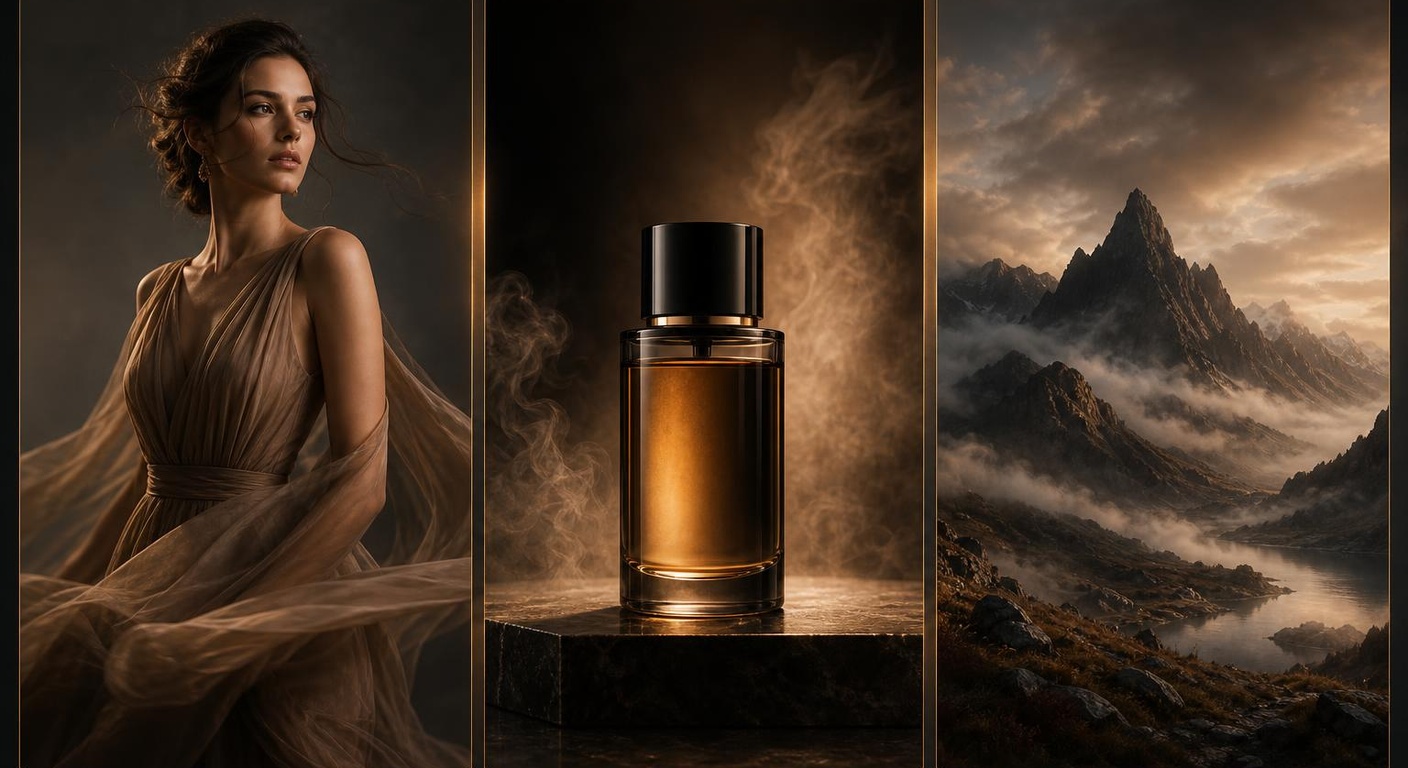
This is the question most creators actually need answered.
Portrait images (headshots, creator bios, fashion)
Best pick: Happy Horse 1.0. First-frame fidelity and character consistency are strongest here. For creator intro loops, waitlist page heroes, and personal brand animations, Happy Horse holds identity best.
Product stills (cosmetics, DTC, editorial)
Best pick: Happy Horse 1.0 for no-audio product loops. If the product video needs to sync with a brand track, test Seedance 2.0 for the audio-aware version.
Cinematic scenes and concept art
Either Happy Horse or Seedance depending on whether audio matters. Both handle atmospheric motion — fog, push-ins, particle effects — reliably from a strong compositional still.
Talking-head or lip-sync content
Best pick: Seedance 2.0. If the clip needs to sync mouth movement to a voice clip or music track, Seedance's multimodal input handling is the clearest advantage.
Benchmark Snapshot (May 2026)
| Model | I2V Elo (no audio) | I2V Elo (audio) | First-frame fidelity | Audio-native |
|---|---|---|---|---|
| HappyHorse-1.0 | 1,415 | 1,163 | Strongest overall | No (audio separate) |
| Seedance 2.0 720p | 1,358 | 1,164 | Very strong | Yes (multimodal) |
| Kling 3.0 | ~1,279 | lower | Strong | Partial |
| Google Veo 3.1 | — | 1,084 | Competitive | Yes |
The split between the no-audio and audio-enabled views is the most important thing this table shows. Happy Horse is the clearer winner when audio is not a hard requirement. Seedance is the model to test when it is.
What You Actually Need to Start
The quality of your source image matters more than the tool in most cases. For image-to-video, the reference frame is doing half the instruction work before generation begins.
Images that consistently produce strong results share a few characteristics:
- One clear subject with readable separation from the background
- Strong lighting direction — flat or overexposed images produce flatter motion
- Compositional depth — foreground, midground, background give the model more to work with
- Clean focal clarity on the subject you need to animate
Images that tend to produce weak results: low-resolution crops, heavy JPEG compression artifacts, composite images with multiple subjects at equal weight, and frames where the critical detail is out of focus.
Should You Use Image to Video or Text to Video?
A common mistake is defaulting to text-to-video when image-to-video would give you more control over the final result.
Use image-to-video when:
- you already have the exact character look, product shot, or scene you want
- brand or subject fidelity matters more than creative exploration
- you want motion enhancement, not scene invention
Use text-to-video when:
- you need the model to invent the scene from scratch
- you are exploring visual directions quickly without a reference
- identity consistency matters less than concept speed
If you are not sure which mode to use for your current brief, the full ranking of AI video generators covers both modes across the same model set.
FAQ
What is the best image to video AI in 2026?
Based on the current Artificial Analysis public leaderboard, Happy Horse 1.0 leads the main no-audio image-to-video benchmark with an Elo of 1,415 as of May 2026. For audio-enabled image animation specifically, Seedance 2.0 holds a narrow edge at 1,164 Elo.
What is the best photo to video AI?
For most creators starting from a still photo — portrait, product shot, or cinematic still — Happy Horse 1.0 is the strongest current option on the public benchmark. It preserves first-frame fidelity and character consistency better than most alternatives in the field.
Can I make an AI video from a picture?
Yes. Image-to-video models take a still image as input and generate a short animated clip while preserving the visual content of the original frame. You provide the image and a motion direction prompt; the model handles the generation. Happy Horse AI's image-to-video tool is live at tryhappyhorseai.com.
Which image to video AI is best for product shots?
Happy Horse 1.0 for general product animation without audio — bottle mist, soft rotation, steam, light sweep. Seedance 2.0 if the product video needs to sync with a brand track or voice-over.
Which AI is best for portrait image to video?
Happy Horse 1.0 in our testing. It holds facial identity, hair detail, and subject separation more consistently than alternatives when the source portrait already has clean lighting and good subject framing.
Can ChatGPT turn images into videos?
ChatGPT does not currently offer image-to-video generation directly. Dedicated video generation models like Happy Horse 1.0 and Seedance 2.0 handle this use case.
Recommended Reading
- Happy Horse AI Image to Video: Complete Guide with Examples
- Happy Horse 1.0 vs Seedance 2.0: Which Video Model Wins?
- Best AI Video Generators in 2026: Full Ranking for Creators
- 50 Happy Horse AI Prompts That Actually Work