
In our testing, Happy Horse 1.0 looked stronger for creators who care most about benchmark-leading motion quality and more natural audio-sync behavior, while Kling 3.0 looked better for teams that want a mature public API surface, official pricing visibility, and more explicit multi-shot creative controls. In other words: Happy Horse felt like the stronger model result, while Kling felt like the easier product to evaluate publicly.
We have been building tryhappyhorseai.com around Happy Horse workflows and comparing its outputs against the strongest public video models we can access. That makes the Happy Horse 1.0 vs Kling 3.0 question especially practical for us: one tool is ranking at the top of public video leaderboards, while the other now has a fully rolled-out 3.0 product line with native audio, multi-shot storytelling, and public API documentation.
As of April 2026, Artificial Analysis places HappyHorse-1.0 first on both its public text-to-video and image-to-video leaderboards. Kling 3.0, meanwhile, is now officially documented by Kling AI as part of a fully available 3.0 API family, with Kuaishou's 3.0 launch announcement and Kling's developer site making its public positioning much clearer than earlier versions.
The Quick Verdict
Happy Horse AI is the stronger public benchmark winner right now. Kling 3.0 is the clearer public platform product. On Artificial Analysis, HappyHorse-1.0 leads Kling 3.0 by a meaningful margin in both text-to-video and image-to-video. But Kling 3.0 also ships with a public API, a public pricing page, explicit multi-shot features, and official documentation for capabilities like lip sync, elements reference, and audio-aware generation.
If your top priority is output strength and natural-looking multilingual speaking clips, Happy Horse AI looked better in our testing. If your top priority is procurement clarity, API onboarding, and structured multi-shot workflow control, Kling 3.0 is easier to evaluate today.
Benchmarks: Happy Horse Still Has the Edge
The current Artificial Analysis text-to-video leaderboard and image-to-video leaderboard are the cleanest public benchmark references available right now.
| Model | T2V Elo | I2V Elo | Public Resolution Listing | Public API Pricing Signal |
|---|---|---|---|---|
| HappyHorse-1.0 | 1,366 | 1,400 | 1080p on leaderboard | Coming soon on Artificial Analysis |
| Kling 3.0 | 1,246 | 1,279 | 1080p (Pro) on leaderboard | $13.44/min on Artificial Analysis |
That is a 120-point gap in text-to-video and a 121-point gap in image-to-video. That is not small enough to dismiss as noise. In practice, when public blind-vote leaderboards show that kind of separation, we usually expect the better-ranked model to look more convincing on motion realism, prompt adherence, or both.
One nuance matters here: Kling also has Kling 3.0 Omni, which scores slightly higher than base Kling 3.0 on the image-to-video page at 1,283 Elo. Even then, it still trails HappyHorse-1.0 by a wide margin. So the public benchmark story is not "Kling catches up if you pick the right SKU." The public benchmark story is still that Happy Horse is ahead.
What Kling does win on is public availability of information. Artificial Analysis lists Happy Horse API pricing as "Coming soon," while Kling already exposes pricing and model variants publicly. That does not mean Kling is the better model. It means Kling is the easier model to evaluate from the outside.
Video Quality & Motion Realism
When we compare top-tier video models, we care less about polished demo reels and more about failure patterns. The most useful tests are the ones that reveal what breaks first: fur motion, cloth physics, crowd coherence, shallow depth transitions, speech timing, and hand movement.
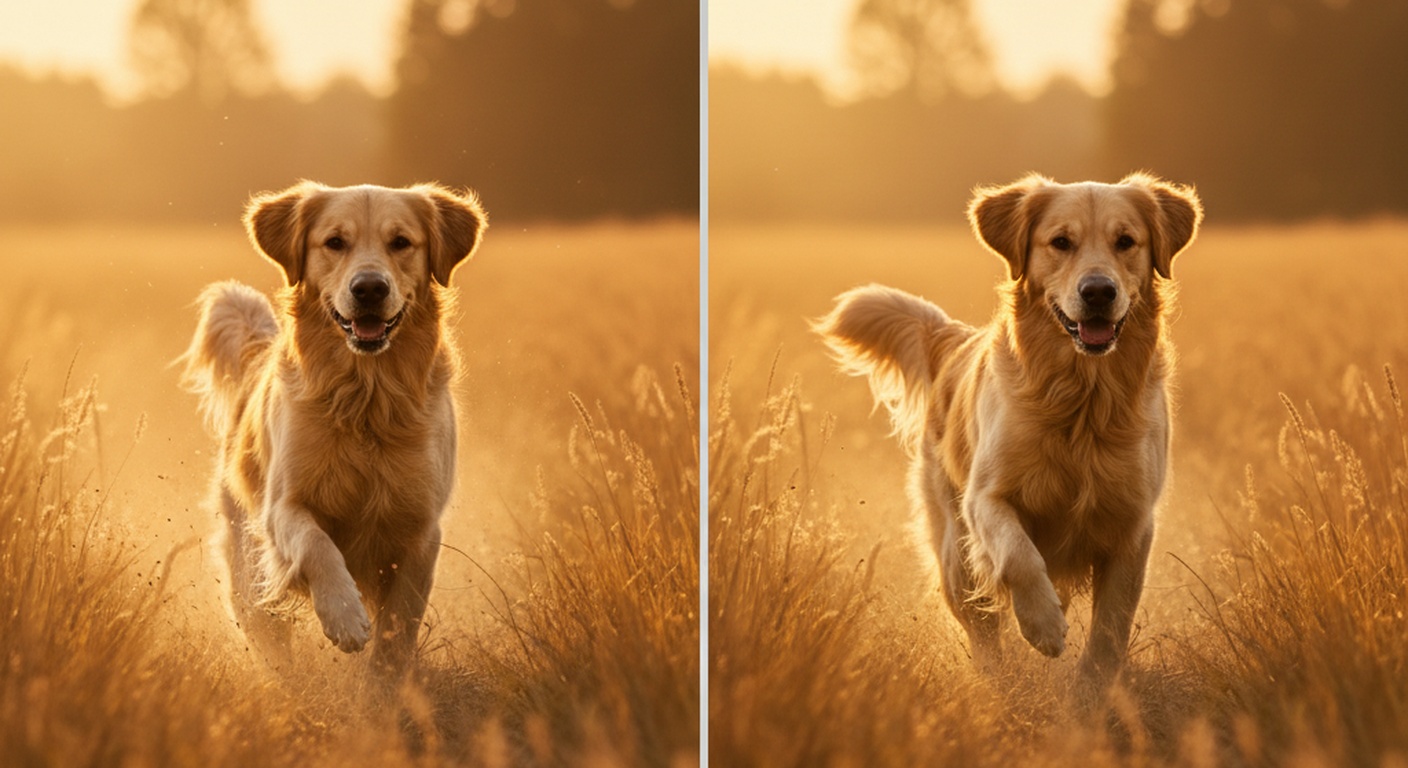
In our testing, Happy Horse AI usually felt more convincing on raw motion realism. It was especially strong on the kinds of shots that are easy to make "pretty" but hard to make believable: a person speaking while turning slightly off-axis, a dog running through textured ground cover, and product shots where steam, glass reflections, and camera movement all need to stay coherent at the same time.
Kling 3.0 did not look weak. In fact, its compositions often looked more intentionally directed, which makes sense given the product's official focus on multi-shot storytelling and shot control. But we repeatedly saw a pattern where Kling clips looked cinematic in framing while still feeling slightly more managed or staged in movement. Happy Horse clips, by contrast, more often looked like they were trying to solve the whole event as one living scene.
That difference showed up most clearly in three categories:
Talking-head clips: Happy Horse generally looked more natural around jaw motion, head rhythm, and small facial transitions. Kling 3.0 was capable, but the performance felt more variable when the dialogue and body rhythm had to stay locked together.
Lifestyle motion: On prompts involving walking, turning, fabric sway, and shallow depth changes, Happy Horse was usually stronger at preserving the illusion of a continuous camera event.
Reference-image animation: Kling's reference tooling is clearly more explicit from a product standpoint, but the current public leaderboard still gives Happy Horse the stronger image-to-video score.
If you are making short ads, localized explainers, or social clips where motion believability matters more than "director mode" control, Happy Horse still looks like the better bet based on both public rankings and our own output review.
Audio, Lip Sync & Multilingual Speaking
This is where the comparison gets more interesting, because both products now have a real story.
Kling 3.0's official materials are much clearer than before. Kuaishou says Kling 3.0 supports native audio generation, multi-character dialogue, multiple languages, dialects, and accents, and more explicit control over who speaks and in what order. The release notes and developer materials also position Kling 3.0 as a more deeply unified multimodal model than earlier Kling generations.
That is real progress. It also means the gap between Kling and the strongest audio-native competitors is smaller than it was in the Kling 1.x and 2.x era.

Even with that improvement, Happy Horse AI still looked better to us on visible sync quality. In our testing on tryhappyhorseai.com, it more consistently held together:
- lip timing across the full clip
- timing between gesture and spoken emphasis
- multilingual speaking scenes that still feel emotionally aligned rather than only technically aligned
Kling 3.0 deserves credit here. Officially, it now supports Chinese, English, Japanese, Korean, and Spanish, plus dialects and accents. That is a meaningful step up. But from a creator workflow standpoint, we would still separate the two products like this:
- Kling 3.0: better publicly documented native-audio product
- Happy Horse AI: stronger observed sync result in our testing
That distinction matters. If you are choosing based on feature checklist alone, Kling has become much more competitive. If you are choosing based on "which speaking clip would I publish without apologizing for it," Happy Horse still looked better to us.
If audio sync is the core buying factor, read How Happy Horse AI Audio Sync Works after this article.
API Access, Pricing Visibility & Workflow Fit
This section is less about which model is better and more about which product is easier to buy, budget, and integrate.
| Dimension | Happy Horse AI | Kling 3.0 |
|---|---|---|
| Public docs | Self-serve web app live at tryhappyhorseai.com | Public developer docs available |
| Public API status | Self-serve web product live; REST API not yet public | Public API family available |
| Public pricing clarity | Published plans available | Stronger developer pricing visibility |
| Multi-shot control | Not clearly documented publicly | Officially documented and heavily promoted |
| Best current signal | Benchmark leadership + live product | Product maturity and developer API clarity |
This section is more balanced now.
Happy Horse AI is live and available to everyone at the AI video generator with published pricing plans. What Kling still wins on is the developer API surface — its documentation, REST endpoints, and per-model pricing visibility are more mature for teams that want to integrate programmatically.
Its developer documentation already lists video generation, lip sync, video effects, elements reference, and related workflow primitives. Its pricing page shows public model families and per-mode pricing logic. Kuaishou's official materials also give buyers a clear narrative around what Video 3.0 and Video 3.0 Omni are supposed to do.
Happy Horse is the stronger model with a live self-serve product. Kling has the more mature developer API story. From a pure procurement standpoint, Kling is still easier to drop into an automated pipeline today.
So if your question is, "Which model seems stronger?" our answer is Happy Horse. If your question is, "Which vendor gives me a clearer public buying path today?" the answer is Kling.
That is also why our recommendation depends on who you are:
- creators and agencies optimizing for output quality: lean Happy Horse
- platform teams optimizing for public API clarity: lean Kling
- teams doing multilingual narrative video with lots of spoken performance: still lean Happy Horse
- teams that need storyboard-style multi-shot control from official product surfaces: Kling is more mature
If you want the broader Google comparison, read Happy Horse AI vs Veo 3 next.
Which One Should You Choose?
Choose Happy Horse AI if:
- you care most about top public benchmark performance
- you want stronger-looking motion realism in creator-facing outputs
- multilingual speaking quality matters more than polished buyer documentation
- you want a live self-serve AI video generator for creators that you can start using today at Happy Horse AI
Choose Kling 3.0 if:
- you need a clearer public API and documentation surface today
- you want official multi-shot storytelling controls
- your team needs pricing visibility before adoption
- you are evaluating multiple vendors and need a product that is easy to budget quickly
Our recommendation
If we were choosing only on output quality, we would still pick Happy Horse AI.
If we were choosing only on public product readiness, we would pick Kling 3.0.
For most creators, agencies, and multilingual marketing teams, output quality is the more important criterion. That is why Happy Horse remains our pick overall. But it is not the same kind of win as the Veo 3 comparison. Against Kling 3.0, the real story is not "Kling is behind everywhere." It is "Happy Horse leads on model strength while Kling leads on product transparency."
If you want to try Happy Horse AI yourself, create videos with AI here — it's live now. If you are still optimizing prompts before choosing a platform, start with 50 Happy Horse AI Prompts That Actually Work.
FAQ
What is Happy Horse 1.0?
Happy Horse 1.0 is Alibaba's latest AI video model and the version being compared in this article. It currently ranks first on the public Artificial Analysis text-to-video and image-to-video leaderboards, so if you are searching for Happy Horse 1.0 vs Kling 3.0, this is the right product-level comparison to read.
Is Happy Horse AI better than Kling 3.0?
On current public benchmark pages, yes. HappyHorse-1.0 leads Kling 3.0 on both Artificial Analysis text-to-video and image-to-video leaderboards as of April 2026. In our testing, it also looked stronger on motion realism and speaking performance. Kling 3.0 is still easier to evaluate publicly because its docs and pricing are clearer.
Does Kling 3.0 have native audio?
Yes. Kuaishou's official Kling 3.0 materials describe native audio, multilingual dialogue, dialect and accent support, and better speaking control than earlier Kling versions.
Is Kling 3.0 easier to integrate than Happy Horse AI?
From a public documentation standpoint, yes. Kling currently has a clearer developer site, clearer model family naming, and a public pricing page. Happy Horse still looks less standardized publicly, even though it leads on current benchmark performance.
Which one is better for image-to-video?
Based on the current Artificial Analysis image-to-video leaderboard, HappyHorse-1.0 is ahead. Kling 3.0 and Kling 3.0 Omni both rank well, but they still trail Happy Horse on the public page.
Should I pick Kling 3.0 for multi-shot storyboarding?
If official multi-shot control is a core requirement, Kling 3.0 is a strong option. Kuaishou explicitly promotes multi-shot storytelling and storyboard-style shot control in its 3.0 materials. If final output realism matters more than official shot-planning controls, Happy Horse still looked stronger to us overall.
Recommended Reading
- Happy Horse AI vs Google Veo 3: Which Video Model Wins?
- How Happy Horse AI Audio Sync Works
- 50 Happy Horse AI Prompts That Actually Work